
Hajj Rituals
Introduction
Hajj is the fifth pillar of Islam and is an obligatory act of worship for every adult, sane, and financially capable Muslim once in a lifetime. It is performed in the holy city of Mecca during the month of Dhul-Hijjah. Hajj represents faith, obedience, equality, and unity among Muslims.
1. Ihram
Ihram is the intention to enter the state of Hajj and begins at specific designated locations called Miqat.
Men wear two white unstitched garments, while women wear modest clothing without adornment.
During Ihram, certain actions are prohibited, such as cutting hair or nails, using perfume, hunting, and marital relations
2. Tawaf
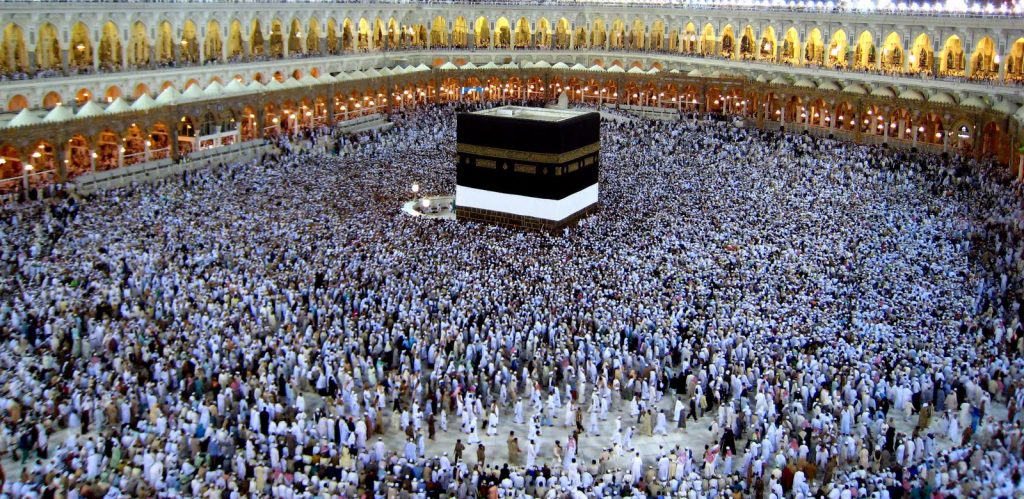
Tawaf is the act of circling the Kaaba seven times, starting and ending at the Black Stone.
The pilgrim performs Tawaf Al-Qudum (arrival Tawaf) upon reaching the Sacred Mosque, showing reverence for the House of Allah.
3. Sa’i between Safa and Marwah
Sa’i involves walking seven times between the hills of Safa and Marwah.
It commemorates the story of Hajar (peace be upon her) and her search for water for her son Ismail, symbolizing patience and trust in Allah.
4. Standing at Arafat
Standing at Arafat is the most important pillar of Hajj and takes place on the 9th of Dhul-Hijjah.
Pilgrims spend the day in supplication and repentance, and the Prophet Muhammad ﷺ said:
“Hajj is Arafat.”
5. Staying overnight in Muzdalifah
After sunset on the Day of Arafat, pilgrims move to Muzdalifah, where they spend the night, combine Maghrib and Isha prayers, and collect pebbles for stoning the pillars.
6. Stoning the Jamarat
Pilgrims stone Jamrat Al-Aqabah on the Day of Sacrifice and continue stoning the three Jamarat during the Days of Tashreeq.
This ritual represents rejecting Satan and his temptations.
7. Sacrifice (Hady)
Pilgrims offer an animal sacrifice, especially those performing Hajj al-Tamattu’ or Qiran, as an act of obedience to Allah.
8. Shaving or Trimming the Hair
Men shave or trim their hair, while women trim a small portion, marking partial or complete exit from Ihram.
9.Tawaf Al-Ifadah
Tawaf Al-Ifadah is an essential pillar of Hajj and is performed after returning to Makkah.
Hajj is not complete without performing this Tawaf.
Conclusion
The rituals of Hajj embody the essence of Islam through obedience, sacrifice, patience, and unity. Hajj strengthens faith and brings Muslims closer to Allah while fostering brotherhood among believers