
Difference Between Hajj and Umrah Rituals
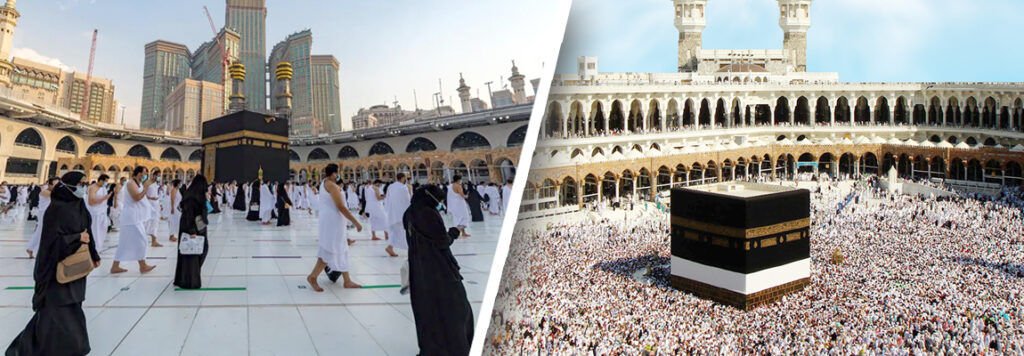
Introduction
Hajj and Umrah are among the greatest acts of worship in Islam, performed to seek closeness to Allah. Although they share some similar rituals, there are clear differences between them in terms of obligation, time, and rituals. This essay highlights the main differences between Hajj and Umrah.
First: Difference in Religious Ruling
Hajj is an obligatory duty performed once in a lifetime by every adult, sane, and financially capable Muslim. It is the fifth pillar of Islam.
Umrah, on the other hand, is a confirmed Sunnah according to most scholars, and obligatory once in a lifetime according to others.
Second: Difference in Time
Hajj is performed during specific months of the Islamic calendar, namely Shawwal, Dhul-Qi’dah, and the first ten days of Dhul-Hijjah.
Umrah can be performed at any time throughout the yea
Third: Difference in Place
Both Hajj and Umrah are performed in Mecca, particularly in the Sacred Mosque.
However, Hajj includes rituals performed outside Mecca, such as standing at Arafat and staying at Muzdalifah and Mina, which are not part of Umrah.
Fourth: Difference in Rituals
Hajj rituals include Ihram, Tawaf, Sa’i, standing at Arafat, staying at Muzdalifah, stoning the Jamarat, offering a sacrifice, shaving or trimming the hair, and Tawaf al-Ifadah.
Umrah rituals are limited to Ihram, Tawaf, Sa’i, and shaving or trimming the hair.
Fifth: Difference in Duration
Hajj rituals take several days to complete.
Umrah can usually be completed within a few hours.
Conclusion
In conclusion, while Hajj and Umrah share similar purposes and some rituals, Hajj is more comprehensive and obligatory, whereas Umrah is simpler and more flexible in time. Both acts of worship purify the soul and strengthen faith.